The Birth of Modern Football: From England to the World
 James Wilson15 March 2023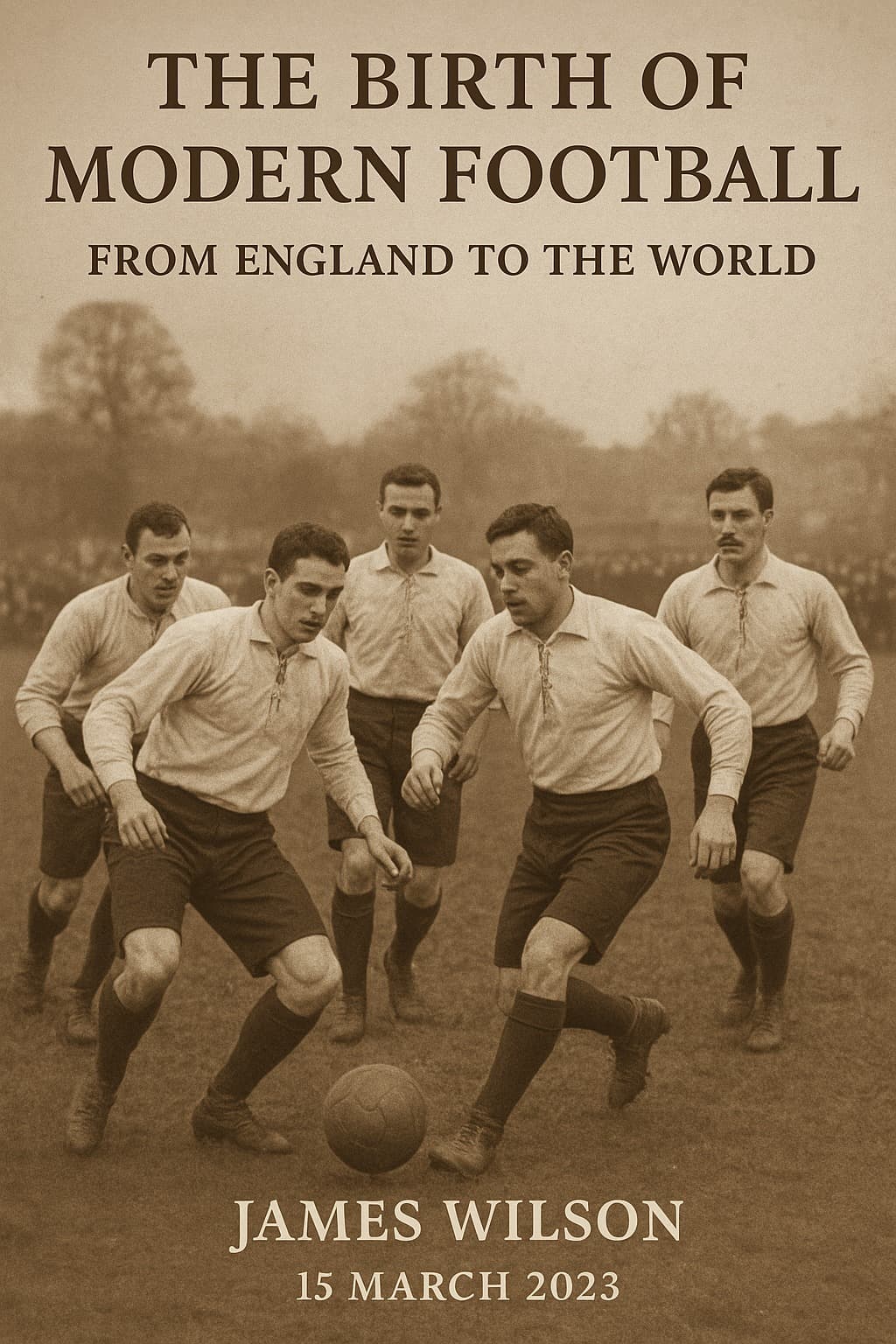
The story of modern football is one of transformation — from rough, chaotic street games to a global sport that captivates billions. While versions of ball games existed for centuries across Europe, Asia, and even the Americas, it was in 19th-century England that football took its modern shape. The formation of The Football Association (FA) in London in 1863 marked a revolutionary turning point. For the first time, a set of standardized rules was established, clearly separating football from its close cousin, rugby. This moment laid the foundation for the world’s most popular game.
During the Industrial Revolution, football evolved from a pastime into a social phenomenon. As cities grew and factory life became the norm, workers sought an outlet for recreation and community. Football — requiring only a ball, a bit of space, and a few enthusiastic players — became the perfect solution. It was simple, inclusive, and exhilarating. Local clubs sprang up across England, and in 1888, the creation of The Football League introduced the first-ever structured league competition. This innovation transformed football into a professional sport and inspired similar leagues across the globe.
The spread of football beyond England’s borders was swift and far-reaching. The British Empire, with its vast global connections, acted as the primary vehicle for the game’s expansion. Sailors, merchants, engineers, and soldiers carried the sport to ports and colonies from South America to Asia, and from Africa to continental Europe. What began as an English pastime soon became an international passion.
By the early 20th century, football had taken deep root worldwide. Nations such as Brazil, Argentina, and Uruguay embraced the sport and infused it with creativity, rhythm, and flair, giving rise to a uniquely South American style. Meanwhile, in continental Europe, countries like Italy, Germany, and Spain developed tactical sophistication and disciplined play, shaping football’s diverse global character. Despite cultural variations, the core principles — the rules laid out in 1863 — remained universally respected.
Football’s journey from the muddy fields of Victorian England to packed stadiums across the world is a testament to its universal appeal. It bridges class, culture, and geography — uniting people in a shared love for the game. What started as an organized effort by a few English gentlemen in a London tavern has become a sport that defines nations, creates legends, and connects humanity through passion and play.
By the early 20th century, football had taken deep root worldwide. Nations such as Brazil, Argentina, and Uruguay embraced the sport and infused it with creativity, rhythm, and flair, giving rise to a uniquely South American style. Meanwhile, in continental Europe, countries like Italy, Germany, and Spain developed tactical sophistication and disciplined play, shaping football’s diverse global character. Despite cultural variations, the core principles — the rules laid out in 1863 — remained universally respected.
Football’s journey from the muddy fields of Victorian England to packed stadiums across the world is a testament to its universal appeal. It bridges class, culture, and geography — uniting people in a shared love for the game. What started as an organized effort by a few English gentlemen in a London tavern has become a sport that defines nations, creates legends, and connects humanity through passion and play.